

The cybersecurity conversation has evolved. Here’s what one front-line technology advisor is discussing with clients.
An innovative, Texas-based provider of network design, cybersecurity, and performance solutions has recently signed on as a valued added reseller (VAR) with Guardian Cyber. We sat down with one of their senior account managers to get his take on the latest in cybersecurity trends.
Is cybersecurity in general on top of businesspeople’s minds – or is it still an “IT problem?”
I would say it’s definitely top of mind. Now if I go back to when I first started with my current company in 2021, I will say it wasn’t something that you talked about every day. A lot of customers would just protect themselves from a defensive posture standpoint – firewalls to endpoint security products. Things have changed over the last few years. What we’ve seen with a lot of our customers, first in that mid-market and enterprise space, are organizations building internal security operations teams and tooling sets. These empower those teams to be proactive and be threat hunters themselves. But then as you go down into that SMB vertical, I’m now seeing a more prevalent conversation of, “How do I receive the same level of security and support as enterprises are able to do internally? How am I able to do that with my organization?”
What has caused this change in attitude over the last few years?
From a driver standpoint, it’s been a multitude of things. A lot of it is just staying in touch with the industry and news. You see the headlines and articles of these large organizations being compromised and under attack, right? These organizations have internal SOC teams, have every tool in the world they could possibly need – yet the bad actors got into the organizations. The mid-markets and SMBs think, “If they’re able to get the big dogs, what makes us exempt?” And I hate to say it this way, but sometimes it takes an incident to get a company to reevaluate what they’re doing to protect the organization and prioritize security for their employees, partners, vendors, everyone involved in every facet of the business.
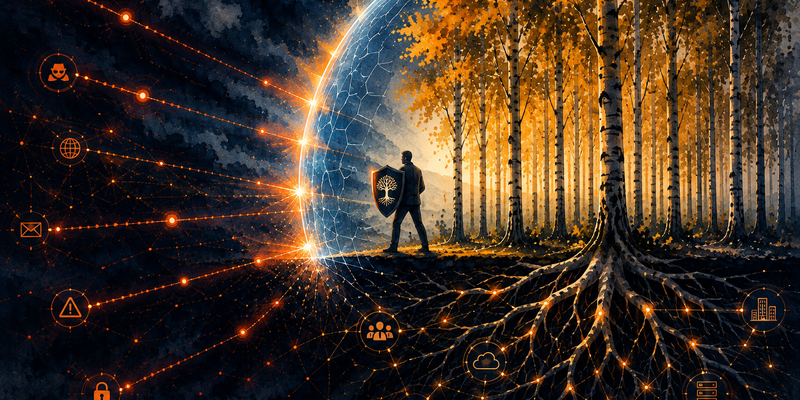
You’ve hit on something Guardian talks about a lot – the Aspen Forest Effect™ – where we’re all connected. When you talk to SMBs, do they understand that they’re part of a bigger chain either as the target or as the path to a target?
You know, I would say from a full understanding perspective, it’s an ongoing education. If you’re talking about a mid-market organization, they are certainly aware of how everything is interconnected. From a network level to security layer, a bad guy is going to test the defenses of whatever holes are out there. SMB customers often need more of an example, like they’ll outsource website hosting to a third party because they just don’t have the marketing staff. So how would a bad actor leverage that third party organization to get inside your environment? What are you doing to ensure that the third party is appropriately protected to prevent any breach of their infrastructure coming into you? That’s what SMBs need to understand.
When you’re out talking to IT people, are you also interacting with senior executives who understand the importance of cybersecurity?
There has been a big shift, starting about two years ago, talking with C-level executives and VP-level executives inside organizations who understand that traditional defensive tools such as firewalls, endpoints, etc., just aren’t going to be able to keep pace with the trends of the industry – especially with AI. Now just like we use AI in our day-to-day, the bad actors are only getting better with AI too. Many SMBs don’t really realize the value of proactive defenses. Unfortunately, once they’re hit and we look back through log data and such, if proactive measures had been in place, we could have caught this much earlier. So that’s where I think we’ve started to see the shift from a leadership perspective with a lot of organizations. I was at an industry conference recently, and probably every other conversation I had with an executive was about cybersecurity and cyber services they’re using currently.
When you’re talking to a company about cybersecurity, does the conversation ever turn to cybersecurity for company leadership? Are companies realizing that, for example, if my CFO gets hacked at home, there’s a possibility it could lead to my business getting hacked?
You know, that hasn’t been a typical talk track for our organization. But to that point, I would say that with work from home and remote work being more prevalent, protecting those individuals outside of a corporate landscape becomes important. And that’s something I’m interested in exploring more about.
The Guardian Cyber difference
Cybersecurity isn’t just defense. It’s offense – prepare, predict and protect. At Guardian Cyber, we operate from the attacker’s perspective, continuously hunting for exposure, identifying gaps, and eliminating the paths threats rely on before they’re used against you. We actively look for what’s exposed instead of simply waiting on alerts. And we monitor and test continuously to make sure you’re protected. Tools alone aren’t enough. Our experienced team protects your environment and proves that it’s working, so you can make decisions with confidence, not assumptions.