

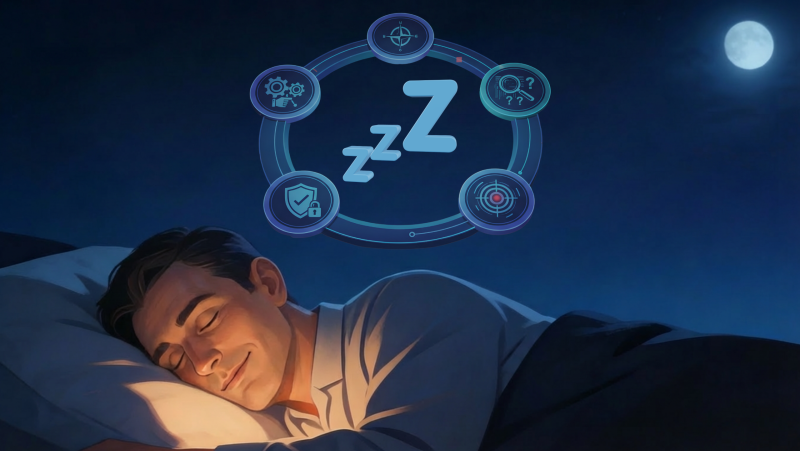
Pameilly Manufacturing looked “cyber secure” on paper: firewalls in place, MDR running 24/7, clean annual audits. Yet the CEO was losing sleep – he kept reading and hearing that it wasn’t enough. Thousands of unprioritized vulnerabilities, unknown cloud exposures, and long gaps between assessments created blind spots attackers could exploit. So, Pameilly adopted a Continuous Threat Exposure Management (CTEM) approach, and shifted from reactive defense to continuous risk reduction. The results: fewer high-risk exposures, clearer reporting, insurer confidence, and a CEO who sleeps well.
The situation
Pameilly Manufacturing is considered an “SMB” – a small and medium-sized business – operating in the South and Southwest. Like many organizations, Pameilly worked diligently to modernize in a digital world, moving workloads to the cloud, adopting SaaS applications, enabling remote work, and integrating with suppliers and logistics partners.
Pameilly’s IT appeared to have the company’s cybersecurity in order. They instituted firewalls, endpoint security, and contracted with an MDR (managed detection and response) service to monitor their endpoints 24/7. Pameilly ran quarterly vulnerability scans and passed its annual cybersecurity audits.
Yet, despite all this, the CEO was losing sleep. He kept reading and hearing that what the company was doing wasn’t enough, and he had a growing and gnawing concern that unknown dangers were out there.
The problem
What caused the CEO’s anxiety? The fact that Pameilly’s cybersecurity team was overwhelmed. Vulnerability reports contained thousands of findings, without prioritizing high to low risks, leaving the team trying to sort through everything with limited time and resources.
In addition, there was little confidence that the team knew everything that could be exposed and vulnerable to hackers and bad actors. This was especially true for older systems, cloud storage, unused remote access, and applications no one actively managed anymore, if they even knew about them.
The CEO knew that, in cybersecurity terms, 12 months between audits might as well be a lifetime. The CEO was happy with the MDR service, but realized that MDR was about detecting active attacks and trying to limit the damage, not telling you where an attacker could get in right now.
Finally, Pameilly’s cybersecurity insurance provider told the company that to ensure coverage, the company would have to prove that it’s addressing cyber risk continuously throughout the year, not just using annual audits and periodic scans.
The solution
Pameilly turned to a per-play cybersecurity services provider to evaluate risk and recommend alternatives. After an assessment and consultation, Pameilly adopted Continuous Threat Exposure Management (CTEM). CTEM is not an off-the-shelf product, but rather a methodology and strategic approach to cybersecurity. Pameilly literally changed how they managed cyber risk.
CTEM gave them a way to continuously:
* Identify what was exposed
* Understand which exposures actually mattered
* Prove that fixes reduced real risk
Applying the features of CTEM
Pameilly implemented CTEM as five connected stages that run in a constant improvement loop:
#1: Scoping. The company expanded protection beyond endpoints and servers to include cloud assets, SaaS tools, remote access points, partner connections, and even dormant systems.
#2: Discovery. They uncovered systems no one realized were still reachable from the internet, including test environments and old cloud storage.
#3: Prioritization. Instead of fixing everything, risks were ranked based on how attackers would realistically exploit them and the business impact if they did.
#4: Validation. Safe testing confirmed which weaknesses could actually be abused, and – importantly – whether fixes truly worked.
#5: Mobilization. Security findings were tied to action, removing internal delays so high-risk issues were resolved quickly.
Pameilly now had continuous visibility into how exposed they really were.
The results and benefits
Within months, Pameilly’s CEO saw tangible outcomes:
* The number of high-risk exposures dropped significantly
* The security team spent time fixing the right issues, and not chasing everything
* The CEO and the team gained clear, defensible reporting on risk reduction
* Compliance discussions became easier, backed by continuous evidence
* Pameilly could give the cybersecurity insurance provider supported proof of ongoing risk management
* CTEM and MDR worked together – creating balanced proactive and reactive defenses
Most importantly, Pameilly reduced the likelihood of becoming the next breach headline, and the CEO could sleep at night.
How Guardian can help
Guardian’s ZoneDefense is our holistic offense and defense CTEM methodology, built on five zones.
#1: Prepare – The best prevention is preparation
#2: Predict – See what the attacker sees and intercept
#3: Protect – AI-powered external attack surface management
#4: Detect – Find issues before they become threats
#5: Recover – Always have clean data ready for recovery
The foundation of our five-zone framework is a robust governance layer that ensures consistency, compliance, and continuous improvement across all security operations. Don’t rely on yesterday’s defense models. Talk to our team and explore the ZoneDefense platform.
The Guardian difference
Defender and attacker – that’s how Guardian works. Our proactive red and reactive blue teams work together as one defense to hunt threats, identify gaps, and stop breaches before they start. We don’t replace your IT provider or MSP agreement; we work alongside them to provide what they can’t. Why? Because cybersecurity is a hard, ever-changing environment. And anyone who tells you it’s simple, or that they already have you covered as part of other managed services, doesn’t understand today’s high-level threat landscape. We do understand – and that’s the Guardian difference.